Magic Chess
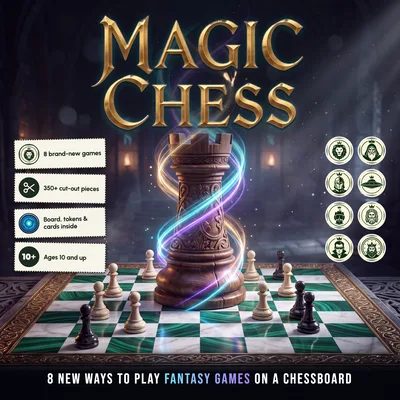
8 New Ways To Play Fantasy Games on a Chessboard
Eight new chess games where the pieces have fantasy powers. Every piece you need is in the book, ready to cut out, with or without a chess set.
Explore Magic Chess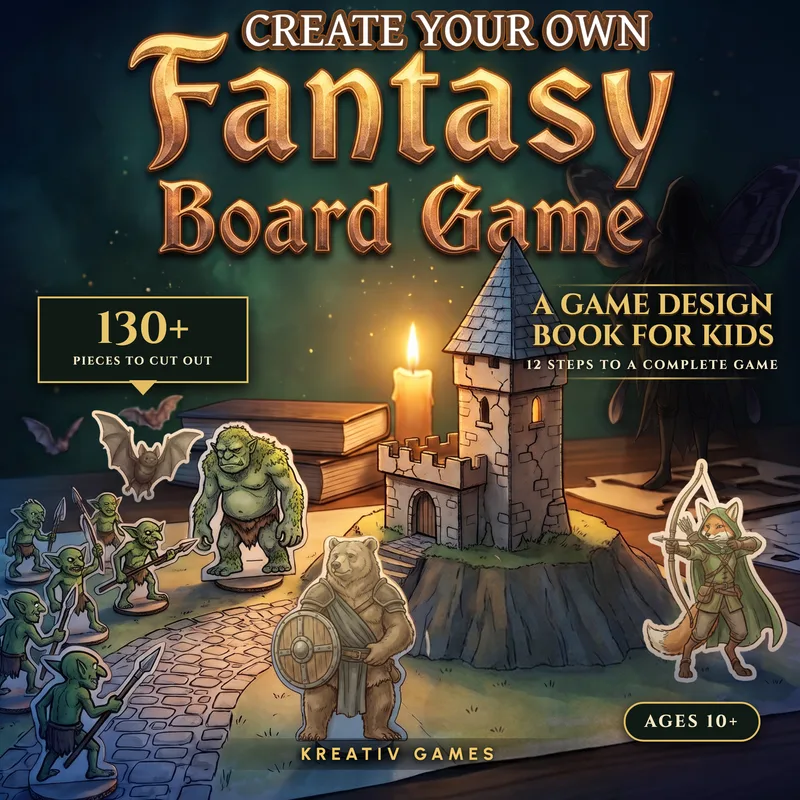
A game in a book, not a book about games: kids build a tower defense board game one step at a time, then make it their own.
Most books about game design explain how games work. This one hands your child a game and lets them grow it. Step 1 is already a complete game you can play in about ten minutes. Every step after that adds one new idea, you play it, and you notice what changed. By Step 12 there is a finished fantasy board game on the table, for 1 to 4 players, with rules your child helped shape.
Lay down one lane strip with six spaces. Put the tower at one end and your hero, the Fox Archer, next to it. A goblin starts on space 6 with two hearts. Every round has two parts: the goblin moves one space toward the tower, then your hero shoots by rolling the die. A 5 or a 6 is a hit and takes away one heart. Knock out both hearts before the goblin walks into the tower, and you win.
That's the whole game, and it's meant to be small. Silvan, the wolf who guides the book, then asks the question every game designer asks: did you decide anything? That question leads to Step 2, where the hero can aim instead of shooting, and the game starts to need real choices.
Two hosts walk through the book. Silvan, a calm wolf, explains one idea per step in a few friendly lines. Rax, a cheeky lion, keeps trying to bend the rules, so kids learn to spot his tricks and write rules that stop them. It's the most natural way we know to learn why clear rules matter.
Tap a spread to open it full size.
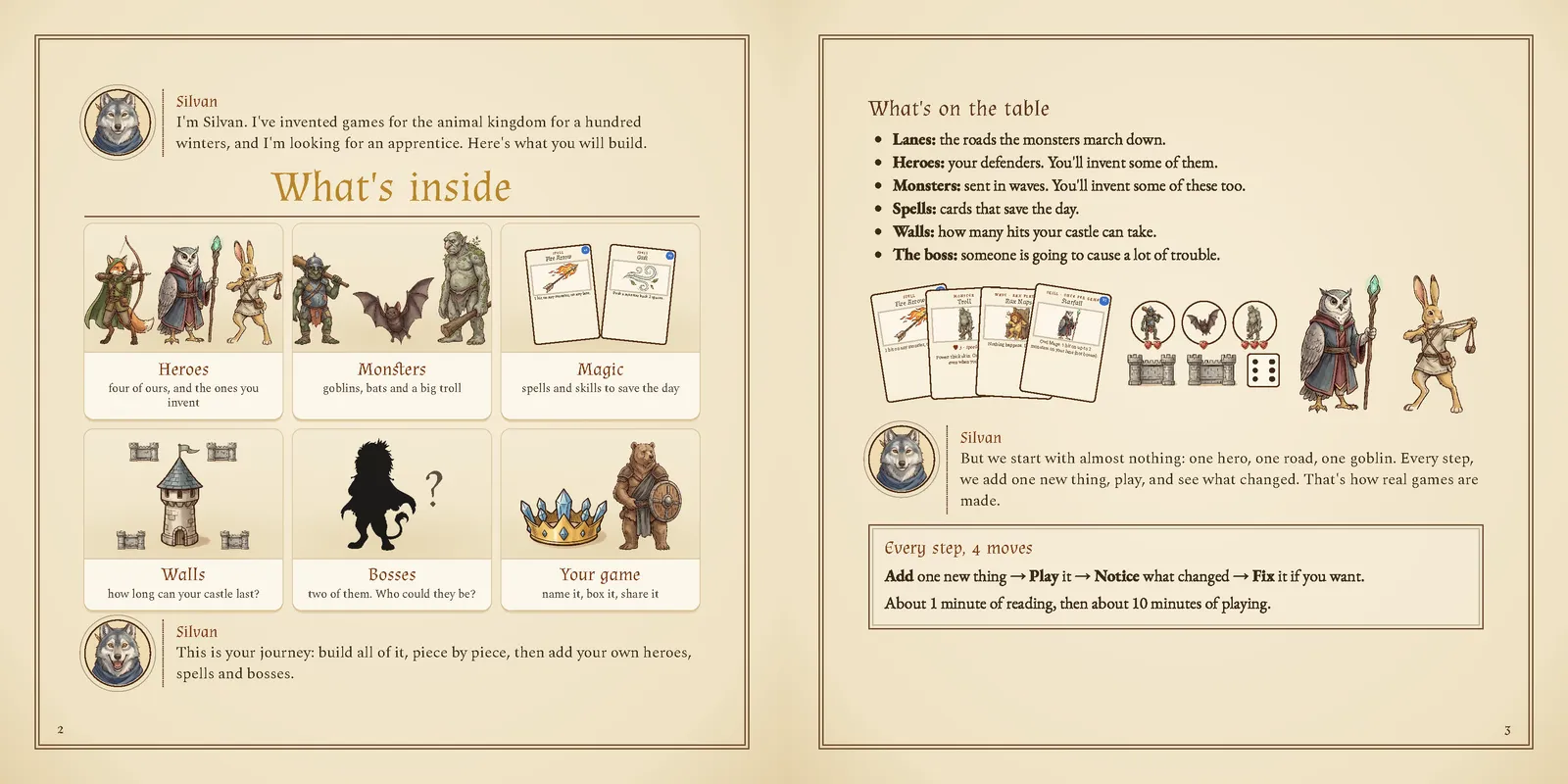
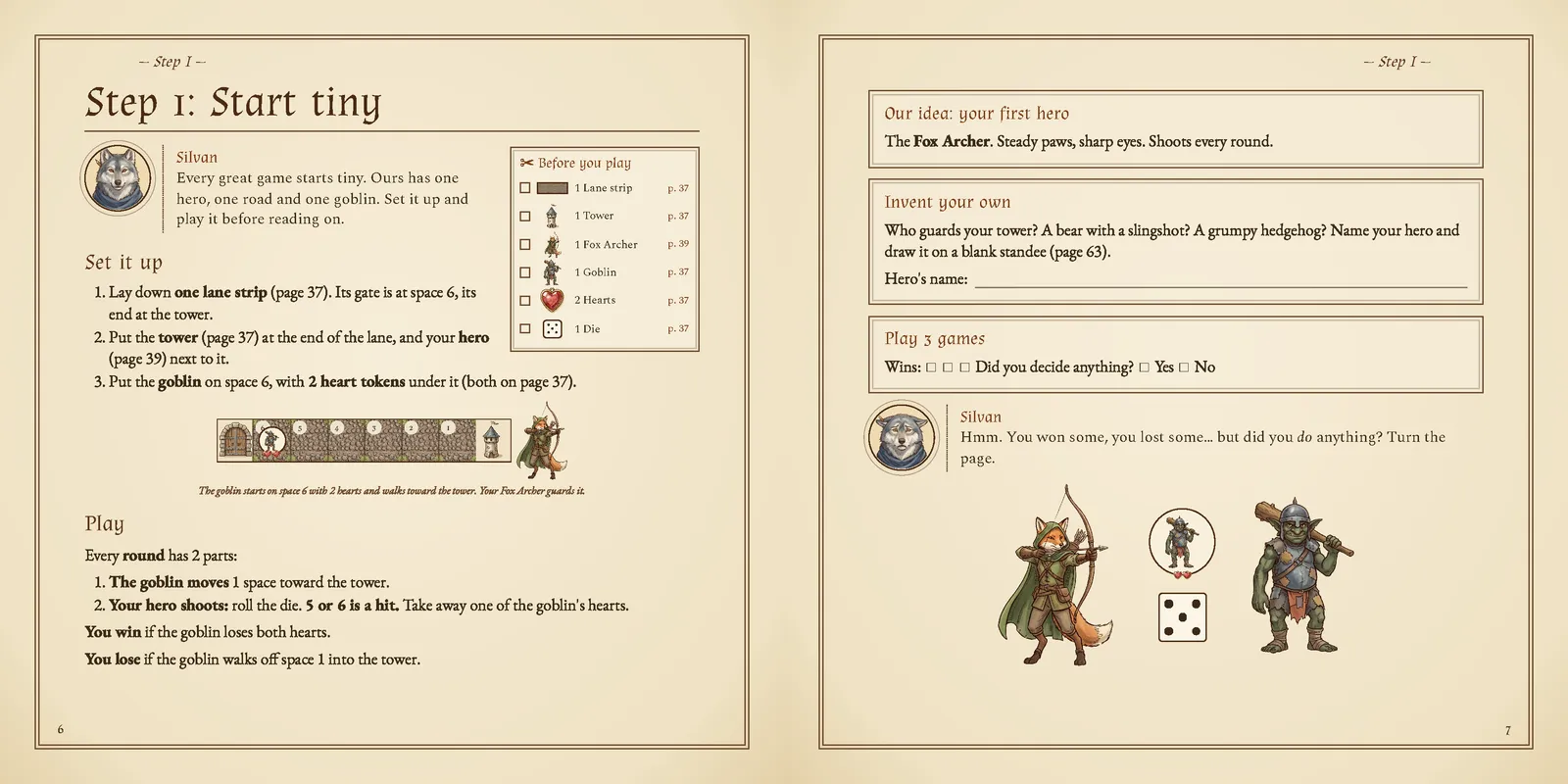
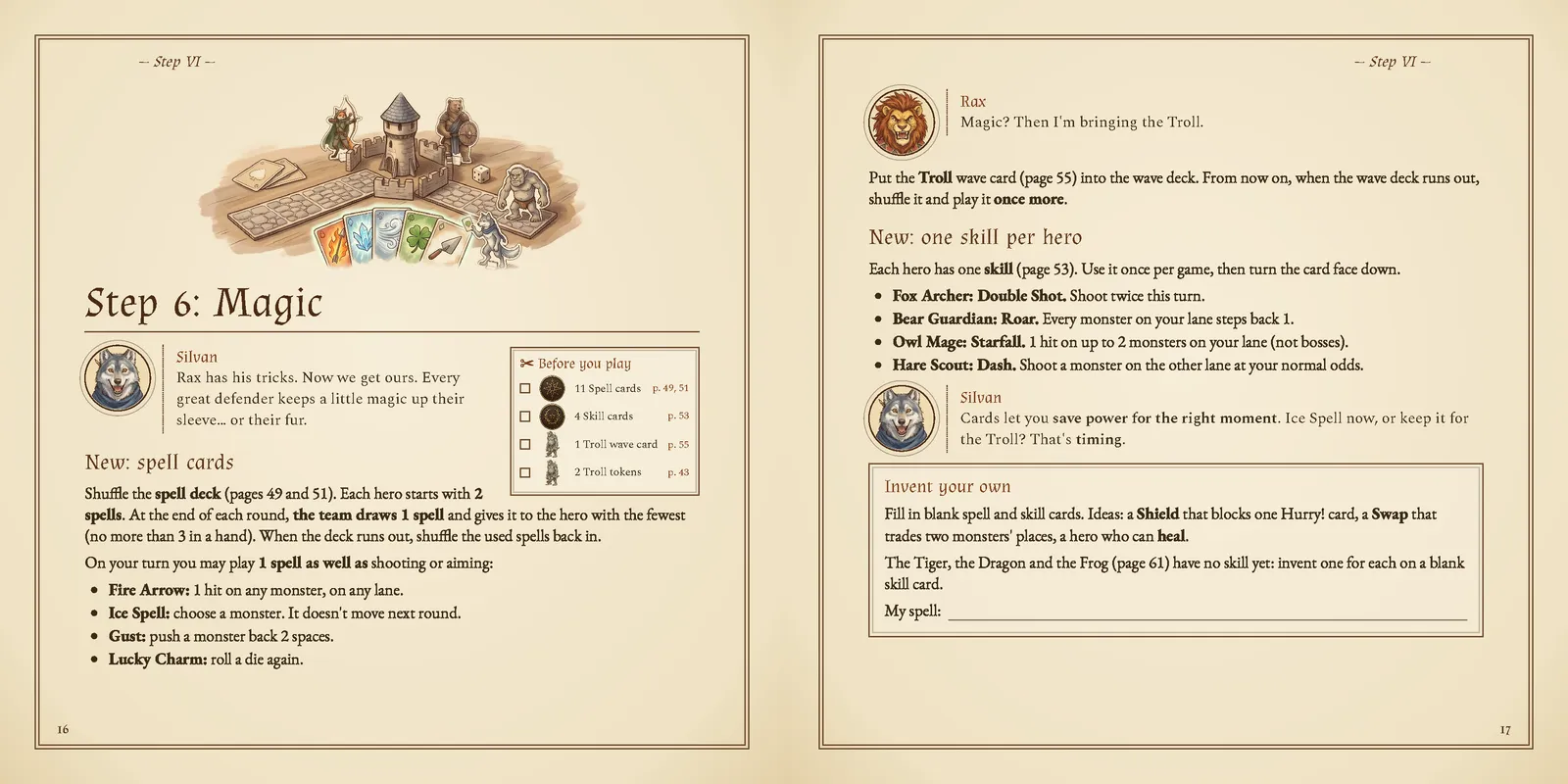
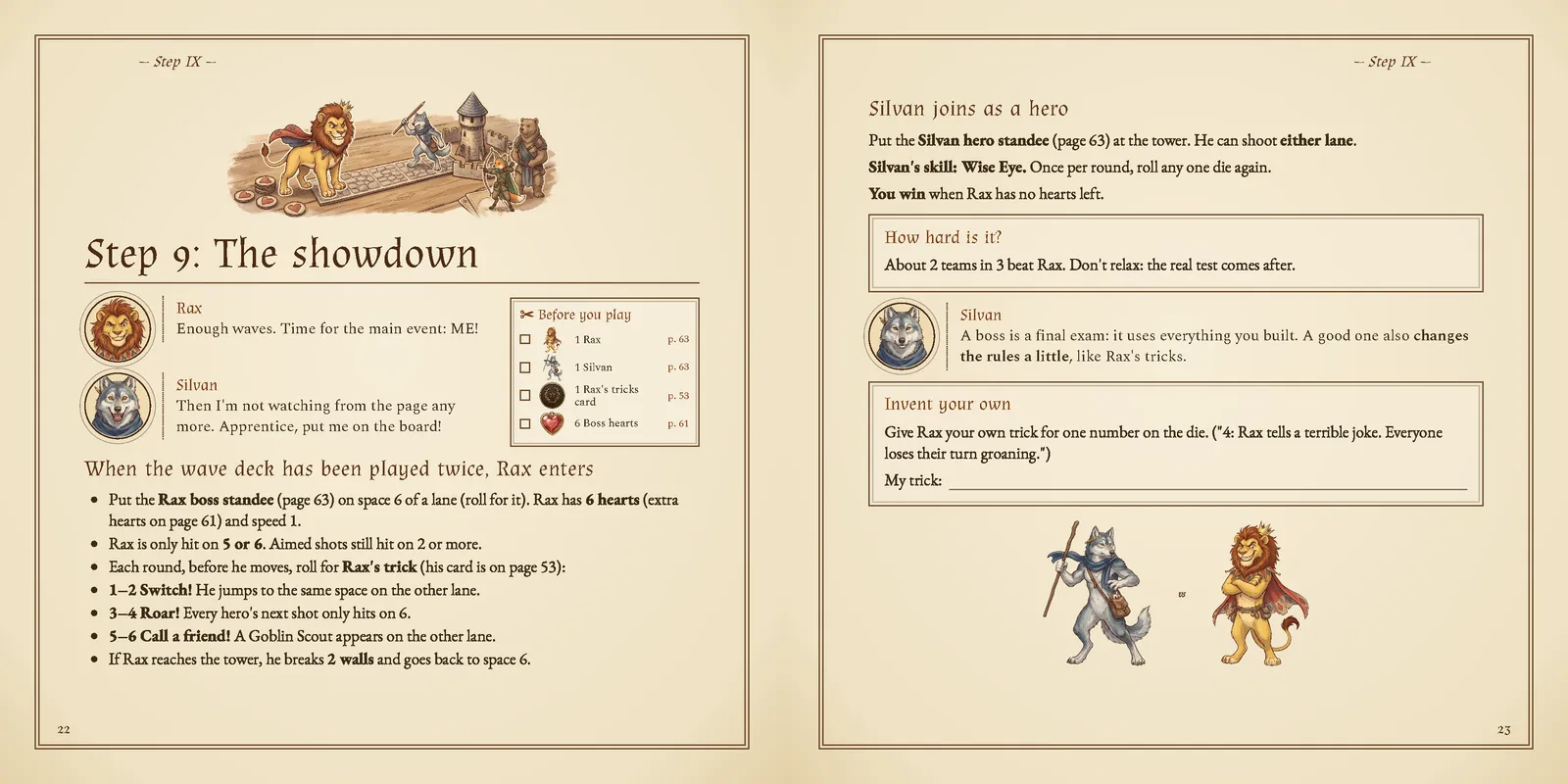
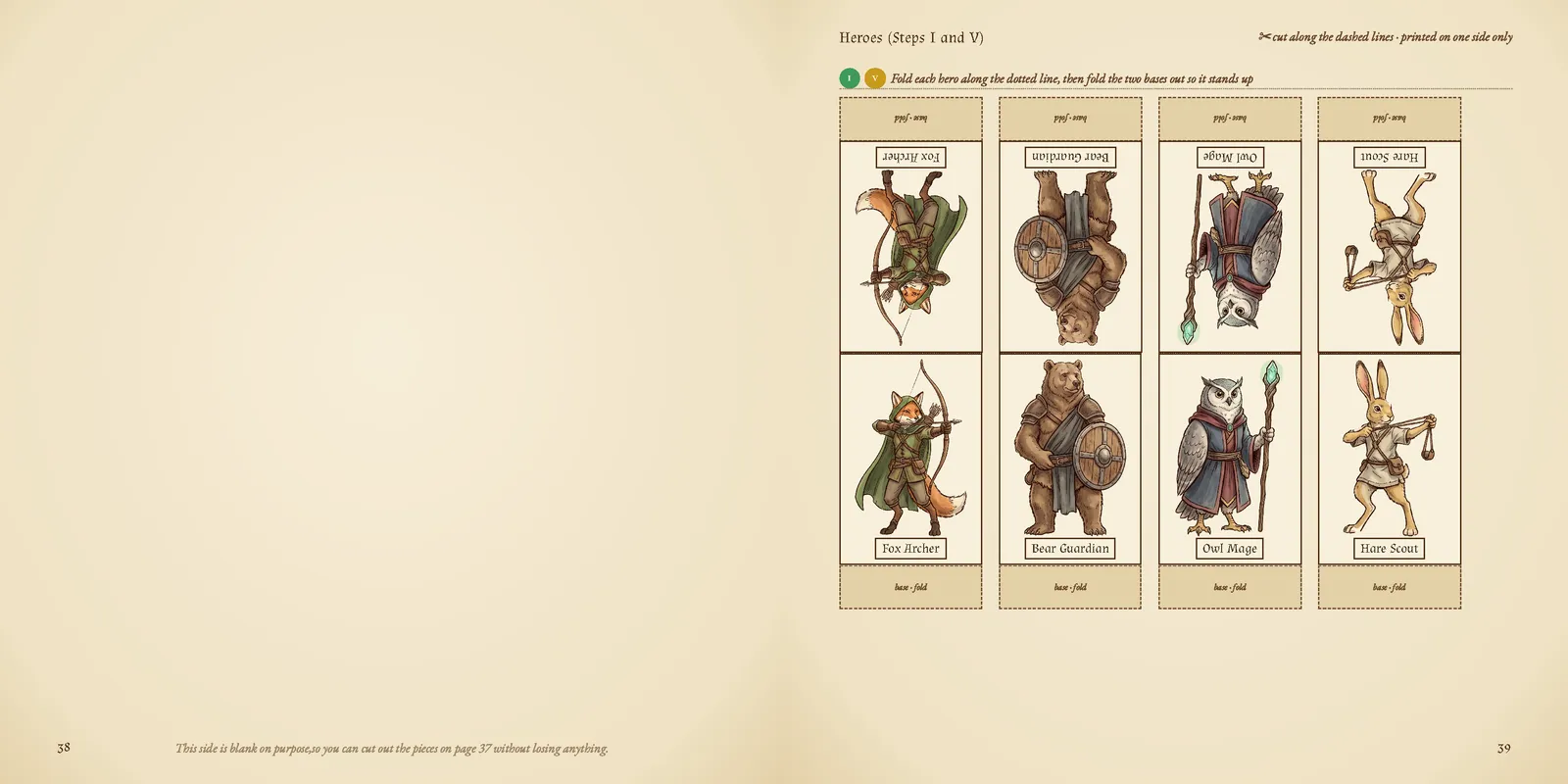
Each step teaches one design idea by playing it: how a turn works, why choices make games fun, surprise, designing creatures, playing as a team, timing, tension, clear rules, bosses, support roles, how one new rule makes a new game, and presenting your own game.
Ages 10 and up. Each step is short and written for kids to read on their own, and younger children can join in with a reader nearby.
Yes. Every step starts with a short explanation from Silvan and a checklist of the pieces to use, with the page where each one is. The game can be played solo. Younger kids may want a hand with scissors and glue.
Scissors, a glue stick, a pencil and one ordinary die. If you don't have a die, the book includes two paper dice to fold.
No. All the cut-out pages are at the back (pages 37 to 68), printed on one side or with matching card backs, so the steps and rules stay whole. For sturdier pieces, glue a sheet onto thin card, such as an empty cereal box, before cutting.
Yes. You may photocopy the cut-out pages for home, classroom or group use, so every player can have a set. Copies may not be sold. A full set is 16 sheets, and black-and-white copies work.
Yes. Each step works as one short lesson on one design idea, so one step per session works well. At tables of five or six, two players share a hero and decide each move together.
A game where monsters march down a road toward your tower and your heroes stop them before they get there. Here it's played on the table with paper heroes, monster tokens and a die.
Yes. Goblin Siege is a complete tower defense board game to print at home, made with heroes and monsters from this book. Step 1 of the book is free to print too.
Yes. Silvan, a wise wolf, guides each step, and Rax, a cheeky lion, keeps bending the rules. At the end a secret final boss appears, and your child gives it a name.
8 New Ways To Play Fantasy Games on a Chessboard
Eight new chess games where the pieces have fantasy powers. Every piece you need is in the book, ready to cut out, with or without a chess set.
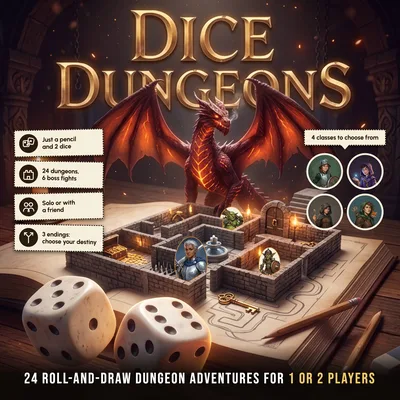
Explore Magic Chess24 Roll-and-Draw Dungeon Adventures for 1 or 2 Players
Roll two dice, draw your path, fight your way to the boss. Twenty-four dungeons across four worlds, with just a pencil and two dice.
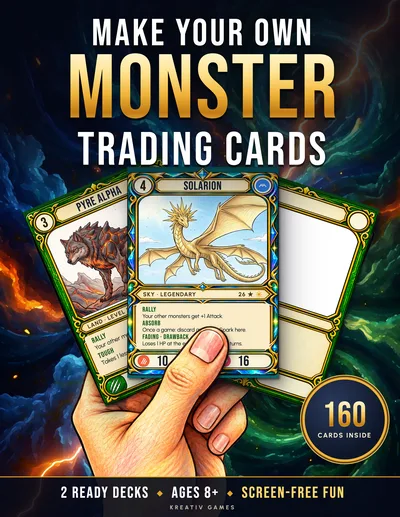
Explore Dice DungeonsA Complete Screen-Free Card Game and Drawing Book for Kids Who Love Monsters, with 160 Cut-Out Cards and 2 Ready-to-Play Decks
A real monster card game to cut out and play, then make your own: 50+ monsters already drawn, blank cards to draw on, and 17 steps that teach how card games work.
Explore the trading cards book