Magic Chess
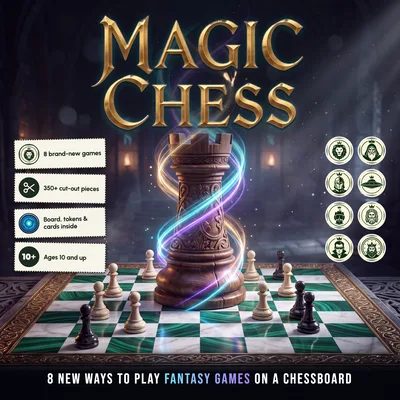
8 New Ways To Play Fantasy Games on a Chessboard
Eight new chess games where the pieces have fantasy powers. Every piece you need is in the book, ready to cut out, with or without a chess set.
Explore Magic ChessKids learn how games work by building one: each session adds one idea, the group plays it, and talks about what changed.
The book is made of 12 steps, and every step follows the same rhythm, which fits a club meeting or a lesson.
Read the step together: about a minute.
The step's checklist lists the pieces and their page.
A few rounds: about ten minutes.
What changed? Harder, fairer, more fun?
Each step ends with a prompt for their own ideas.
Allow extra time in the first session for cutting out the starting pieces. After that, each step only adds a few new pieces.
The design idea of each step, as the book itself sums it up, and how players learn it.
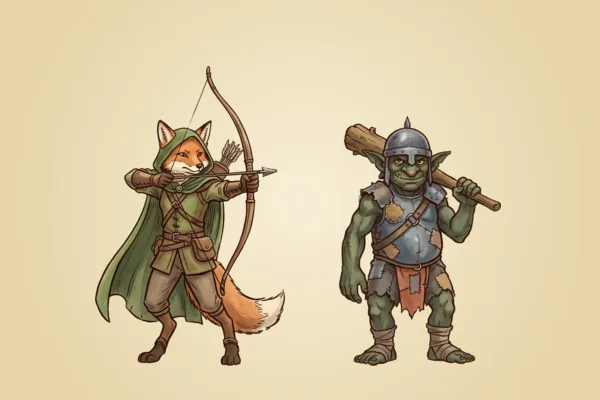
Kids learn how a turn works, the core of every game, by playing one hero against one goblin.
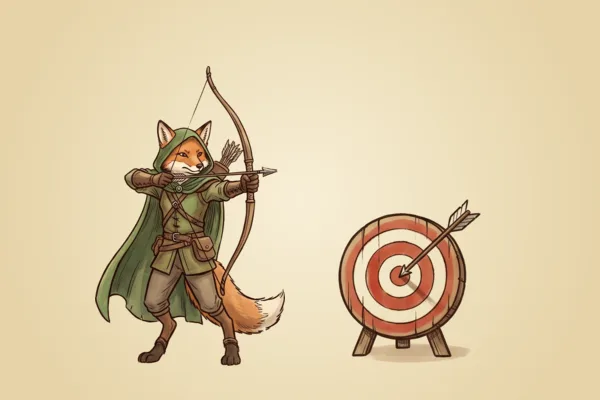
Kids learn that choices make games fun, by choosing to shoot now or aim for a better shot.
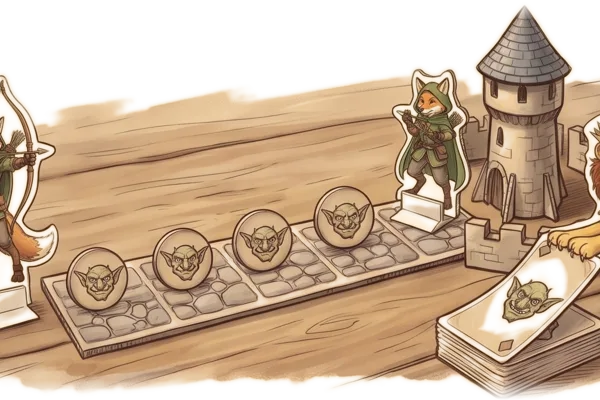
Kids learn how surprise keeps everyone at the table, by turning over wave cards.
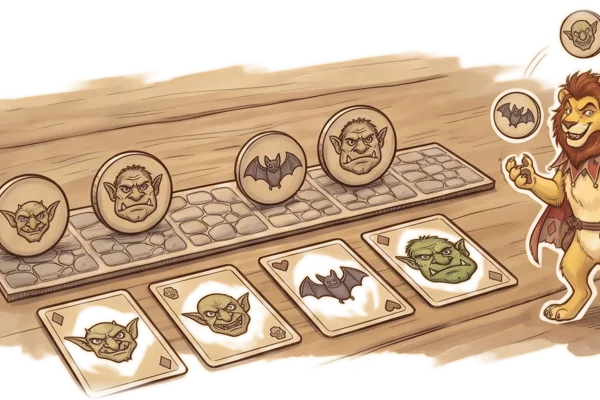
Kids learn how to design creatures that ask new questions, by giving each monster hearts, speed and a power.
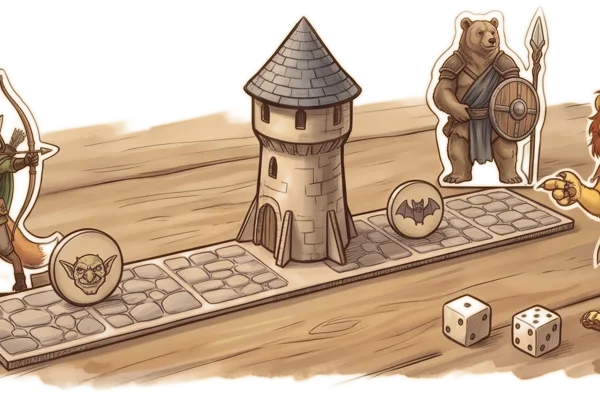
Kids learn how to play together and split attention, by adding a second lane and a second hero.
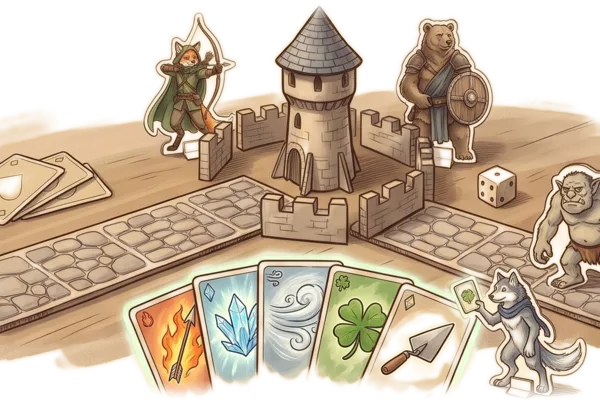
Kids learn how timing and cards create great moments, by adding spells and once-per-game skills.
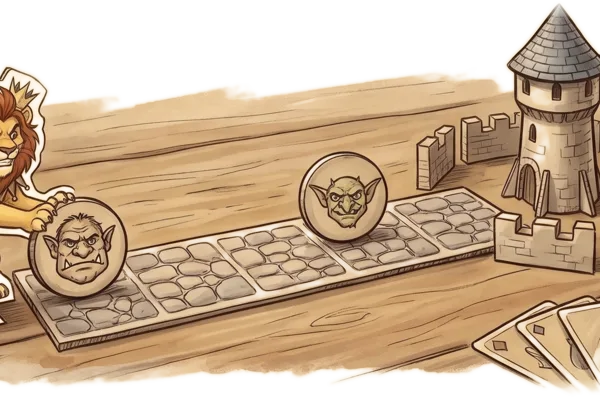
Kids learn how tension makes an ending exciting, by adding walls that crumble one by one.
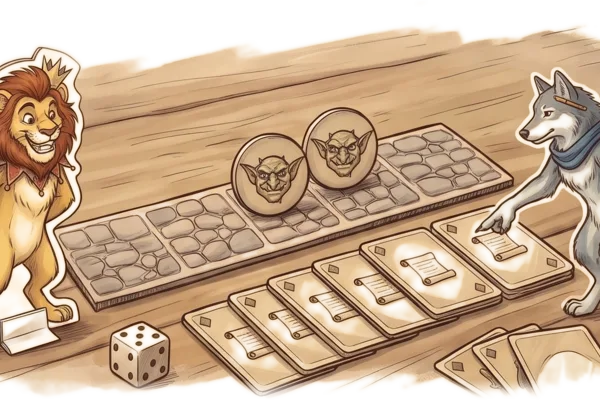
Kids learn how to write clear rules and tune a game, by fixing Rax's cheats and turning the balance dials.
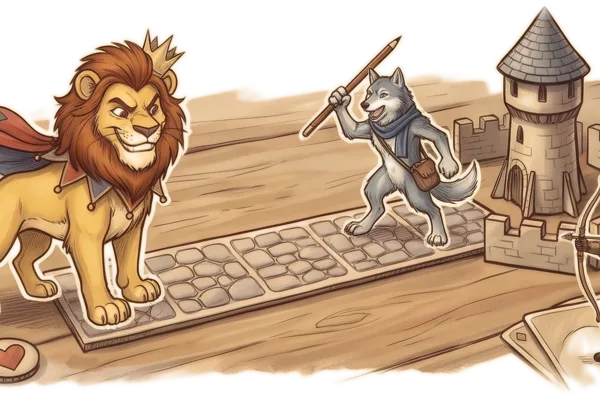
Kids learn how a boss tests everything they built, by facing Rax, the lion host, in a boss fight.
Kids learn how a second phase and support roles work, by a final fight we won't spoil here.
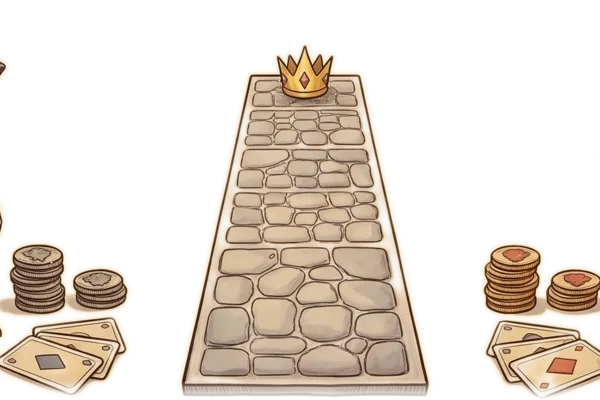
Kids learn that one new rule makes a whole new game, by playing a duel, a race and a puzzle.
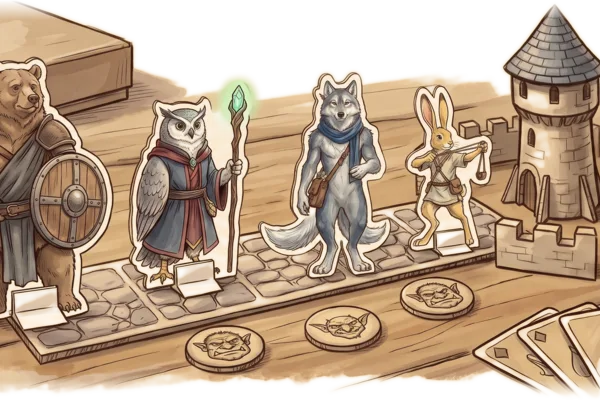
Kids learn how to present a game, by naming it, drawing its box, writing its rules and teaching it.
Each step page has the explanation, a checklist of pieces with their page, and the rules. The cut-out pages are at the back.
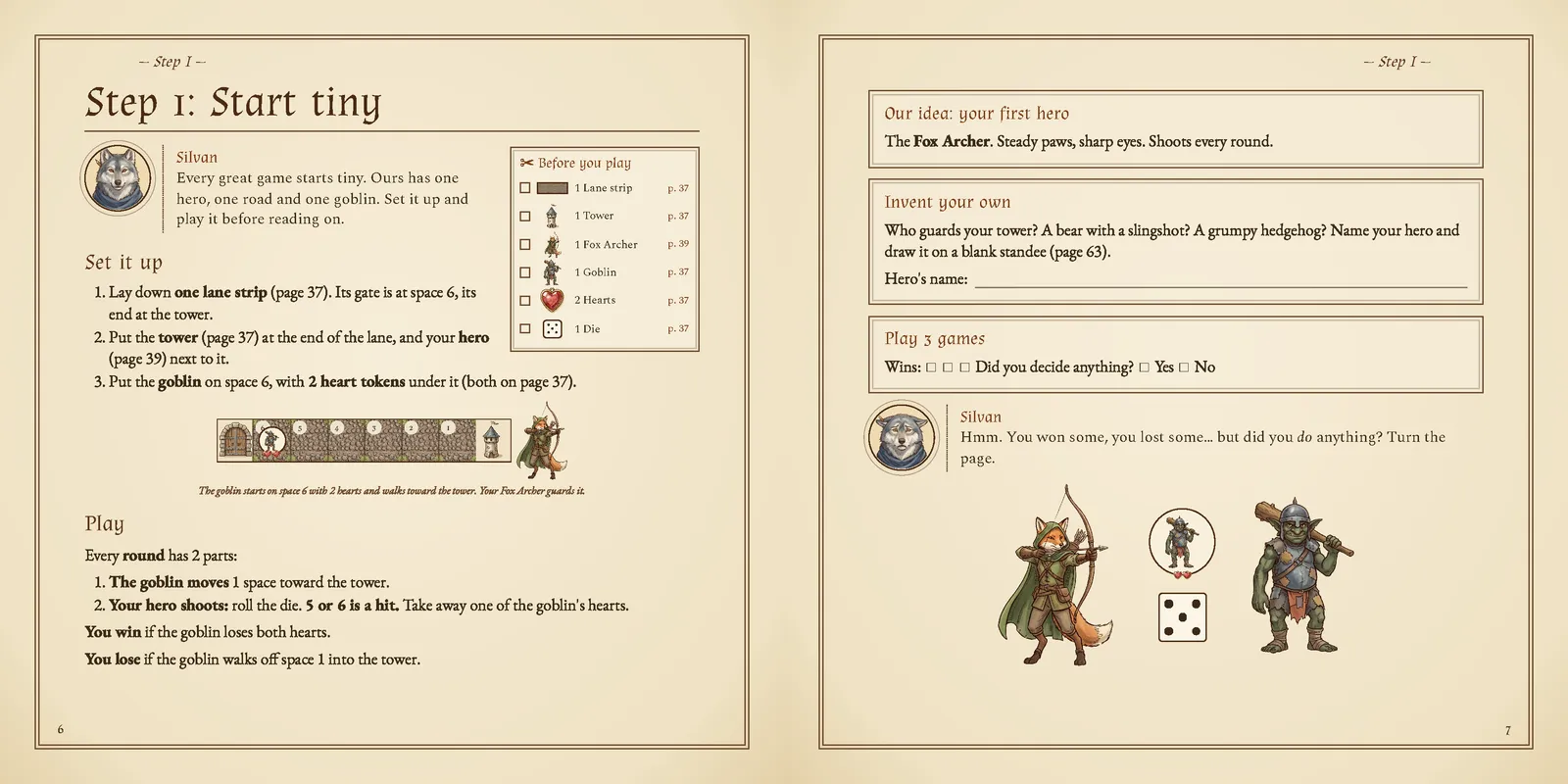
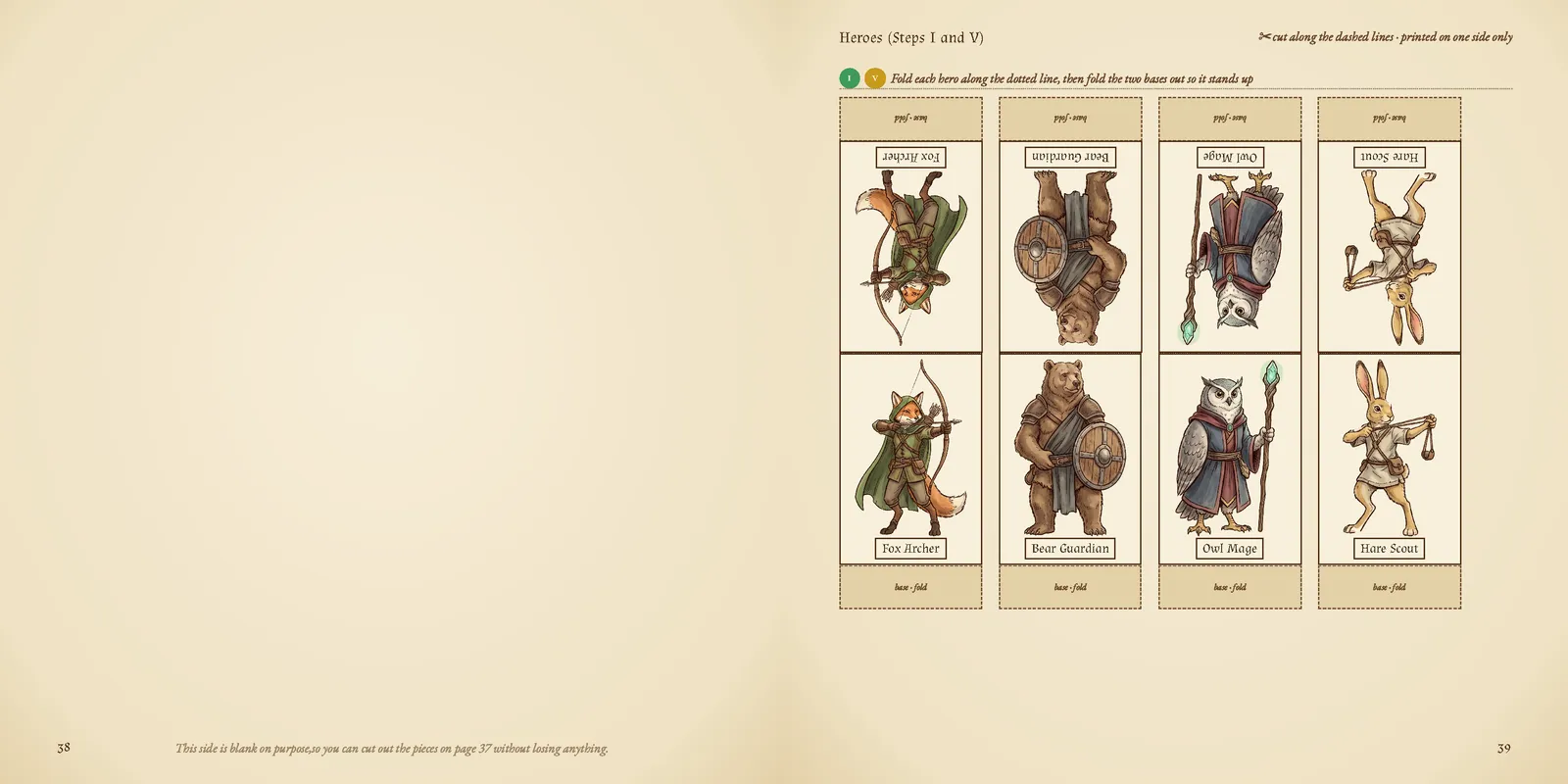
Across the unit, players practise following a turn structure, weighing chances when they roll, making and comparing choices, working as a team when heroes share a board, and writing rules clear enough that a cheeky lion can't find a way around them. The book closes with the method they used all along:
At the end, each player or table has a finished game with a name, a box design and written rules: a natural presentation or showcase.
Magic Chess fits chess clubs: eight variants with fantasy powers that work with the club's chess sets. Dice Dungeons makes a quiet-time or reward activity: one player, a pencil and two dice, and dungeons can be erased and replayed. Make Your Own Monster Trading Cards makes a short card game design unit for ages 8 and up: kids balance their own cards with a simple Stars rule, and the owner may photocopy the card pages, tokens and battle mat for the class. Start with the trading card game guide, the free blank cards and the free card maker.
8 New Ways To Play Fantasy Games on a Chessboard
Eight new chess games where the pieces have fantasy powers. Every piece you need is in the book, ready to cut out, with or without a chess set.
Explore Magic Chess24 Roll-and-Draw Dungeon Adventures for 1 or 2 Players
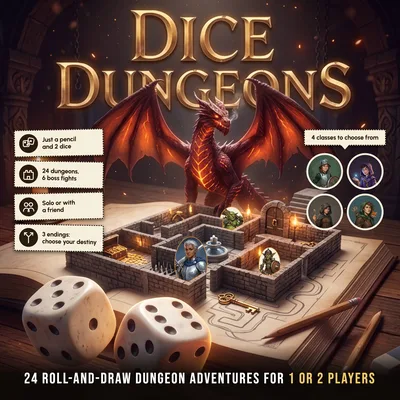
Roll two dice, draw your path, fight your way to the boss. Twenty-four dungeons across four worlds, with just a pencil and two dice.
Explore Dice DungeonsA Complete Screen-Free Card Game and Drawing Book for Kids Who Love Monsters, with 160 Cut-Out Cards and 2 Ready-to-Play Decks
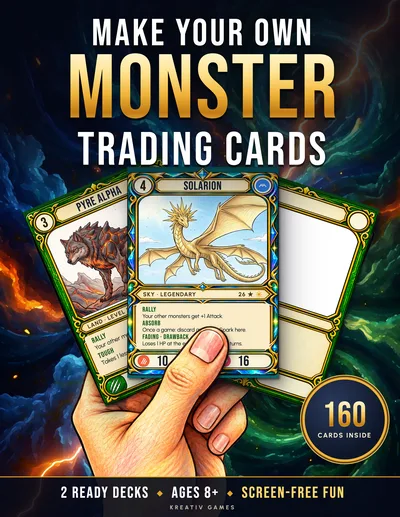
A real monster card game to cut out and play, then make your own: 50+ monsters already drawn, blank cards to draw on, and 17 steps that teach how card games work.
Explore the trading cards book